Words of Affirmation: The Subtle Power of Expressing Appreciation
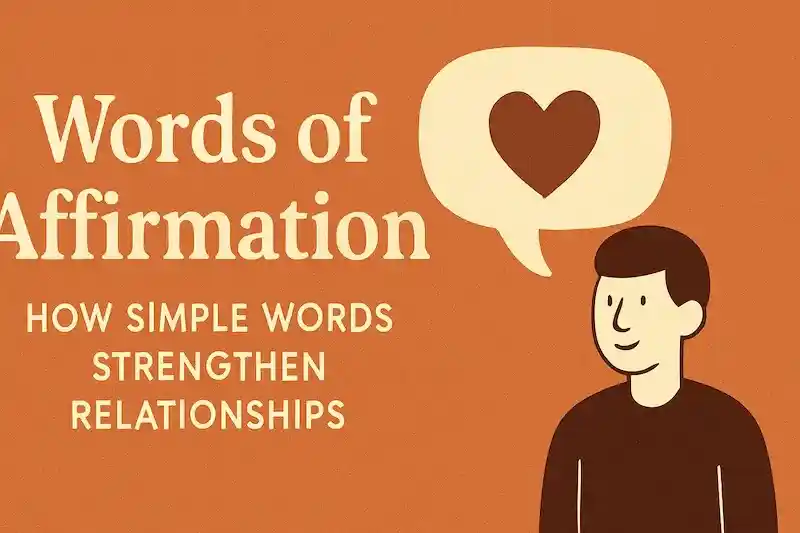
Table of Contents
Introduction
It was a Friday evening, and Emily sat on her couch, scrolling through messages from her partner, Mark. Among the usual “how was your day?” texts, one message stood out: “I really appreciate how patient you were with the kids today. It meant a lot to me.” Emily felt an unexpected warmth spreading through her chest. It was a small note, a simple acknowledgment—but it made her feel seen, valued, and loved.
For many of us, words are more than just sounds or letters strung together. They carry weight, convey care, and sometimes, heal. Psychologists often point to words of affirmation as a powerful tool in human connection—a way to nurture relationships, reinforce self-esteem, and even influence mental health. But why do certain words resonate so profoundly, while others barely register? And how can we use this subtle art in daily life without it feeling forced or artificial?
Concept / Background
The idea of words of affirmation originates from the widely recognized Five Love Languages framework developed by Dr. Gary Chapman. While originally aimed at romantic relationships, its principles are broadly applicable: friends, family members, and coworkers can all benefit from thoughtful verbal appreciation.
At its core, words of affirmation are simply verbal expressions that communicate appreciation, respect, or encouragement. They don’t have to be elaborate or poetic—often, clarity and sincerity matter more than cleverness. Psychologists note that humans are wired to respond to social validation. Positive verbal feedback releases dopamine and oxytocin, neurotransmitters linked to pleasure and bonding, creating a physiological response that reinforces the connection between people.
Interestingly, the impact of words isn’t universal. Some people deeply crave verbal recognition, while others prioritize acts of service or quality time. This means understanding your own and others’ communication preferences is key. Misalignment can lead to unintentional hurt, even when intentions are good.
Real-life Examples / Scenarios
Case 1: Romantic Relationships
Consider Jack and Lila, a couple navigating the stress of busy careers. Lila often felt unnoticed after long workdays, despite Jack’s effort to support her. One evening, Jack paused to say, “I noticed how hard you’ve been working lately, and I admire your dedication.” It was a small acknowledgment, yet it sparked a shift in their dynamic. Lila began feeling emotionally safer to share her struggles, while Jack felt closer to her in return.
The takeaway here is simple but profound: recognizing effort, not just outcomes, can make partners feel valued. It’s the difference between feeling seen as a person versus merely a function in someone else’s life.
Case 2: Workplace Appreciation
Sarah, a project manager, often overlooked her colleague, Tom, who quietly handled critical tasks behind the scenes. After a team presentation, she said, “Your attention to detail really made this project successful. Thank you for going the extra mile.” Tom beamed, visibly more engaged in subsequent meetings.
Words of affirmation at work aren’t just “feel-good” gestures—they influence engagement, motivation, and even productivity. Social psychologists suggest that recognition fulfills a basic human need for esteem, driving intrinsic motivation beyond financial rewards.
Psychological Mechanisms
Why do words of affirmation carry such power? Part of it stems from the self-verification theory, which posits that people seek confirmation of their self-concept. When someone acknowledges your efforts or qualities, it reinforces your internal identity and validates your sense of worth. Conversely, lack of recognition or dismissive language can chip away at self-esteem, sometimes more than overt criticism.
Another lens comes from attachment theory. People with secure attachment often thrive on balanced communication, but those with anxious tendencies may be particularly sensitive to verbal affirmation—or its absence. For them, hearing “I value you” can reduce anxiety and foster a sense of security.
Neuroscientific studies reinforce this: positive affirmations activate the brain’s reward centers, particularly the ventromedial prefrontal cortex. This suggests that words don’t just influence emotions—they trigger measurable changes in brain activity, helping reinforce social bonds and even supporting mental health.
Practical Advice / How to Apply Words of Affirmation
Integrating words of affirmation into daily life doesn’t require grand declarations. The trick is authenticity, specificity, and timing. Here are some actionable ways to make it work:
- Notice the small efforts: Instead of waiting for a monumental achievement, acknowledge the little things. “I saw how patient you were with the kids today—thank you.”
- Be specific and sincere: Generic compliments can feel hollow. Highlight the exact action or quality you value. “Your presentation was clear and engaging; it really helped the team understand our goals.”
- Balance frequency: Too few affirmations, and they’re forgotten; too many, and they might lose impact. Aim for natural integration rather than scripted repetition.
- Adapt to individual preferences: While words of affirmation resonate with many, others may respond better to actions. Pairing verbal praise with supportive behavior strengthens the effect.
- Internalize affirmation for yourself: Self-talk is a form of words of affirmation. Verbalizing appreciation for your own efforts can enhance resilience and self-esteem. For example, saying “I did the best I could today” reinforces self-worth and emotional stability.
Common Pitfalls
Even with good intentions, words of affirmation can backfire if not delivered thoughtfully. Overgeneralized or insincere praise often feels manipulative. Timing is also crucial—acknowledging effort after a mistake may seem dismissive rather than encouraging. Awareness of tone, context, and relationship history helps prevent these missteps.
Conclusion
Words of affirmation may seem deceptively simple, but their impact runs deep. They are a bridge—between partners, friends, family, and colleagues—connecting intention with emotion, effort with recognition. When used thoughtfully, they validate, heal, and inspire, offering a quiet yet profound form of human connection.
Like Emily reading Mark’s message, we often underestimate the power of a few sincere words. Yet those words, carefully chosen and genuinely felt, can leave a lasting imprint, reminding someone they are seen, appreciated, and loved. And in a world where silence or oversight can feel so loud, the right words can make all the difference.
FAQ
Q: Are words of affirmation only for romantic relationships?
A: No. While popularized in romantic contexts, words of affirmation are valuable in friendships, family dynamics, and workplaces. Recognition and verbal appreciation enhance bonds across all social connections.
Q: What if I’m not good at expressing words?
A: Authenticity matters more than eloquence. Simple, sincere statements like “I appreciate you” or “You did great” are highly effective.
Q: Can words of affirmation improve self-esteem?
A: Yes. When delivered authentically, they reinforce self-worth and encourage positive self-perception. Pairing them with self-affirmation practices can be even more powerful.
Q: How do I know if someone responds to words of affirmation?
A: Pay attention to their reactions. Some people may visibly relax, smile, or express gratitude. Others may feel awkward; in that case, coupling words with supportive actions can be more effective.
References
- Chapman, G. (1995). The Five Love Languages: How to Express Heartfelt Commitment to Your Mate. Northfield Publishing.
- Swann, W. B. (1983). Self-verification: Bringing social reality into harmony with the self. Psychological Perspectives on the Self, 2, 33–66.
- Hazan, C., & Shaver, P. (1987). Romantic love conceptualized as an attachment process. Journal of Personality and Social Psychology, 52(3), 511–524.
- Falk, E. B., Berkman, E. T., & Lieberman, M. D. (2012). From neural responses to population behavior: Neural focus group predicts population-level media effects. Psychological Science, 23(5), 439–445.