What Are the Love Languages? Understanding & Applying Them
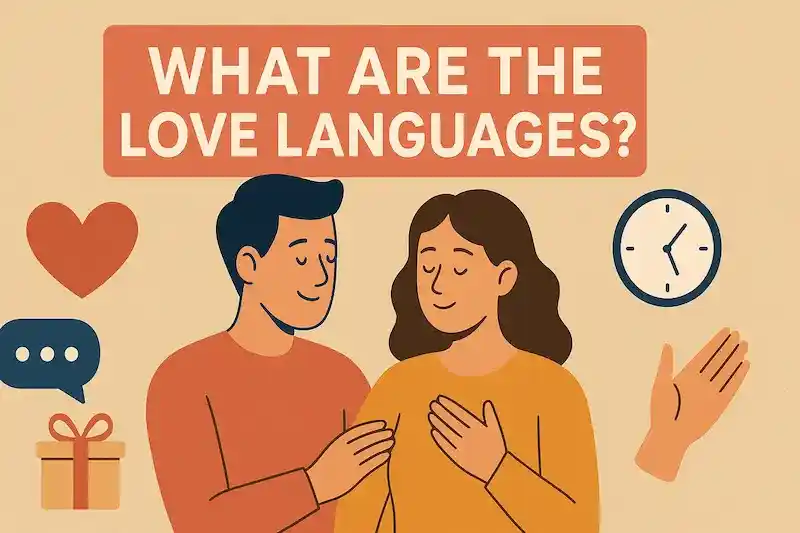
Table of Contents
I. Introduction — Why We Keep Loving the Wrong Way
If you’ve ever sat across from someone you love—someone you genuinely care about—yet still felt strangely unseen, you’re not alone.
Maybe you’ve been in a relationship where both people insisted, “I’m doing everything I can,” yet neither felt fully loved.
He works overtime to create a stable life for both, but she whispers, “You never make me feel valued.”
She plans surprises and buys thoughtful gifts, but he mutters, “Why don’t you just spend time with me?”
Two people, deeply in love, quietly breaking under the weight of unspoken expectations.
It’s one of the most painful experiences in relationships:
You give your best, but your best doesn’t land.
You express love in the way that feels natural to you, yet the other person receives it as something incomplete—or worse, invisible.
This brings us to one important question that has saved countless relationships from silent collapse:
What are the love languages—and why do they matter more than we think?
II. The Hidden Reason Many Relationships Feel “Off”
When people talk about relationship problems, they often assume the issue is a lack of love.
But psychology—and thousands of real couples—show us something different:
Most relationships don’t suffer because of too little love.
They suffer because we love in the wrong way.
Humans naturally express affection in the style they grew up with, the style that feels comfortable, familiar, or instinctive.
For some, love is shown through actions.
For others, it’s expressed through gentle words, long conversations, small surprises, or even through a simple lingering touch.
But here’s the catch:
The way you show love is often not the way your partner receives love.
This mismatch creates an emotional echo chamber.
You’re speaking Chinese, they’re speaking French—and both insist, “But I said it clearly!”
What people often forget is this:
Love languages are not just a theory for couples.
They are the psychological blueprint for how humans send and receive emotional connection—in friendships, family, professional relationships, and every part of life where affection or appreciation matters.
Understanding love languages isn’t about memorizing a list.
It’s about learning the emotional code behind how people feel valued.
III. What Are the Love Languages?
Before we go deeper, let’s anchor the core concept.
When people search what are the love languages, many expect a textbook definition. But the truth is far more human than a list or a chart.
Love languages are not personality traits.
They’re not fixed categories.
They’re not a relationship test result.
Love languages are emotional preferences—how each person naturally interprets love.
Think of them as the “dialects” of affection.
You may say “I love you” through thoughtful actions, while another person hears “I love you” only when you offer focused attention or comforting words.
Traditionally, the framework includes five major love languages:
- Words of affirmation
- Acts of service
- Receiving gifts
- Quality time
- Physical touch
But instead of viewing them as rigid labels, we’ll explore them as emotional experiences—living, changing, deeply human ways of feeling loved.
Let’s begin with the language people often misunderstand the most.
IV. Love Language #1 — Words of Affirmation: Why We Crave to Be Seen
Picture this:
You’ve spent weeks noticing your partner is stressed, so you buy them something thoughtful—maybe a new gadget, a cozy sweater, or their favorite snack.
You hand it over proudly, expecting relief to wash over their face.
Instead, they simply say, “I just needed you to tell me I’m doing okay.”
To someone whose love language is Words of Affirmation, emotional connection is built with recognition. They don’t need grand gestures; they need to feel seen.
The Psychology Behind It
Why do some people crave verbal validation?
Often, it comes from emotional history:
- Some grew up in families where effort was expected but rarely acknowledged.
- Others learned to mask their feelings, so gentle words feel like emotional permission to breathe.
- Many were raised in environments where doing well was normal, but mistakes were pointed out loudly.
For these individuals, words aren’t just sounds.
They are proof that they matter.
What Words of Affirmation Actually Mean
People with this love language don’t need flattery or exaggeration.
They need sincerity.
They long to hear things like:
- “I’m proud of you.”
- “I appreciate how hard you work.”
- “You make my life better in ways you don’t even realize.”
How to Express It Without Feeling Forced
If you struggle with verbal expression, start small:
- Comment on their effort.
- Recognize their strengths.
- Acknowledge what they’re trying to improve.
- Say “thank you” more deliberately.
Words cost nothing, but for some, they are the most valuable currency of love.
V. Love Language #2 — Acts of Service: Love as Effort, Not Words
For some people, a relationship becomes stronger not through compliments or sweet talk, but through moments like this:
You’re overwhelmed with work.
Your partner quietly tidies the room, brings you a cup of warm tea, and says gently,
“Don’t worry, I’ve taken care of it.”
To someone who values Acts of Service, these small acts are louder than any “I love you.”
Why Effort Feels Like Love
People who resonate with this love language often grew up believing that love is shown—not said.
Maybe they saw family members work tirelessly for each other.
Maybe nobody said “I’m proud of you,” but people always did things to help.
To them:
Effort = commitment
Support = safety
Taking action = love in its purest form
The Cultural Layer
In many cultures, especially Asian, Latin, and some European families, love is rarely verbalized.
Instead, it’s given through:
- Cooking meals
- Taking on responsibilities
- Working hard without complaint
- Helping silently
So when someone from this background enters a relationship, they naturally continue expressing love through service—because that’s how they were taught love looks.
But There’s a Trap
People who give through service often fall into emotional burnout.
They say yes to everything.
They carry too much.
They forget to ask for help.
Sometimes they become “the reliable one,” not because it’s fair, but because they don’t know another way to show love.
Learning boundaries is essential.
Love expressed through service should be joyful—not exhausting.
How to Love Someone With This Language
- Help without being asked.
- Notice their stress points.
- Lighten their load.
- Follow through on promises.
Small actions, done consistently, can transform the relationship.
VI. Love Language #3 — Receiving Gifts: Not About Money, But Meaning
Many people misunderstand this love language.
When someone says they feel loved through gifts, others quickly label them as materialistic.
But that’s far from the truth.
For people with this emotional preference, a gift isn’t about price—
it’s about presence.
It’s the feeling that someone thought of you at a random moment—
in the grocery store, during a trip, on the way home from work—
and chose something small that says, “This reminded me of you.”
A Tiny Story That Says Everything
Imagine this:
You mentioned once—just once—that you like peach-flavored drinks.
A week later, your partner walks in with one and hands it to you casually,
“I saw this and thought of you.”
For someone whose love language is Receiving Gifts, this simple gesture can be overwhelming in the best way.
Not because of the drink.
But because it means:
You were in my mind when I wasn’t next to you.
The Psychology Behind It
Gifts act as tangible emotional anchors.
They become physical reminders of connection, comfort, and attention.
This love language is common among:
- People who grew up receiving small symbolic tokens (festive candies, lucky charms, handwritten notes)
- Individuals whose parents expressed love through thoughtful surprises
- Highly sentimental personalities who attach memories to objects
How to Give Gifts Without Pressure
This love language works best when gifts are:
- Small: a flower, a bookmark, a snack
- Meaningful: tied to an inside joke or a shared moment
- Spontaneous: not only on holidays
- Intentional: showing you truly pay attention
It’s not about luxury—it’s about emotional attentiveness made visible.
VII. Love Language #4 — Quality Time: Presence Over Presents
There’s a modern relationship tragedy happening everywhere:
Two people sitting side by side.
Both scrolling.
Neither truly there.
To someone whose love language is Quality Time, this is emotional starvation.
They don’t need constant activities or dramatic dates.
They need your presence, not your proximity.
Why Quality Time Matters So Deeply
This love language is rooted in emotional synchronization.
Some people feel closest to others when sharing uninterrupted moments—
talking, cooking together, walking, or simply sitting quietly but fully connected.
For them, intimacy is built not through words or gifts, but through being emotionally tuned in.
Why Some People Need Shared Experiences
Many individuals who value Quality Time grew up in families where bonding happened through:
- Eating together
- Going on small trips
- Watching TV as a group
- Doing chores side by side
Human brains are wired for connection, and shared experiences strengthen that wiring.
How to Create Genuine Quality Time
You don’t need expensive dates or elaborate plans.
You need:
- Phone-free moments
- Eye contact
- Listening without multitasking
- A walk after dinner
- Five minutes of “How are you, really?”
Presence is a choice.
And for some, it is the purest love they know.
VIII. Love Language #5 — Physical Touch: Healing Through Human Connection
Sometimes, words fail.
Sometimes, explanations confuse more than clarify.
And in those moments, a single hug can soften everything.
For people whose love language is Physical Touch, closeness is comfort.
A Story That Reveals the Heart
Picture this:
After a long, exhausting day, your partner collapses onto the couch.
Instead of talking, you sit beside them and gently place your hand on their back.
No words.
Just warmth.
And suddenly, they feel safe.
For someone who needs physical touch, that moment is more powerful than a thousand conversations.
The Psychology of Touch
Touch is the first emotional language humans learn.
Long before babies understand words, they understand warmth, closeness, and gentle contact.
Touch regulates the nervous system.
It lowers stress hormones.
It creates a sense of belonging.
This is why people who lacked affectionate touch in childhood may either:
- crave it intensely, or
- feel uncomfortable and guarded around it
Both are normal.
Both are human.
Respecting Boundaries While Offering Warmth
Healthy physical touch is never forced.
It respects:
- Timing
- Comfort levels
- Personal history
- Emotional state
But when given with care—a hand squeeze, a hug, a kiss on the forehead—it becomes one of the most healing forms of love.
IX. Why Couples Often Speak Different Love Languages
Here’s the part most people never consider when asking what are the love languages:
We didn’t choose our love language.
It was shaped.
By our families.
By our culture.
By our childhood wounds.
By the models of love we witnessed growing up.
The Family Blueprint
Some grew up in households where:
- Love = cooking and caretaking
- Love = gifts during holidays
- Love = constant touch and affection
- Love = expressed verbally
- Love = spending time together
Naturally, they bring that template into relationships.
The Attachment Factor
Anxious partners may crave words or touch.
Avoidant partners may prefer acts of service.
Secure partners often adapt more easily.
Our attachment styles influence how we seek reassurance.
The Common Misunderstanding
People assume:
“My way of loving feels right to me, so it should feel right to you.”
But love languages don’t work through projection—
they work through translation.
A Realistic Example
Imagine this couple:
- She expresses love through acts of service—cleaning, cooking, planning.
- He needs words of affirmation—compliments, encouragement, verbal warmth.
She feels unappreciated because he doesn’t notice her efforts.
He feels unloved because she rarely says anything affirming.
They love each other deeply, yet unintentionally hurt each other daily.
Different languages.
Same love.
Lost in translation.
X. How to Discover Your Love Language Without Test Quizzes
Forget online quizzes.
Forget score charts.
Your love language isn’t determined by a questionnaire.
It’s revealed by your emotional patterns.
Here are three more human, realistic ways to discover it:
1. Notice What Hurts You the Most
The opposite of your love language often shows up as your deepest emotional wound.
- If criticism crushes you → Words of Affirmation may be your language.
- If neglect of chores frustrates you → Acts of Service might be key.
- If forgotten gifts feel painful → Receiving Gifts holds meaning.
- If multitasking during conversations upsets you → Quality Time matters deeply.
- If lack of affection feels distant → Physical Touch may be central.
Pain reveals longing.
2. Notice What You Complain About Repeatedly
Our complaints are often disguised requests.
- “You never say anything nice.”
- “You never help me.”
- “You’re always busy.”
- “You don’t hold me anymore.”
These aren’t criticisms.
They’re emotional clues.
3. Notice How You Naturally Give Love
People often express love the way they wish to receive it.
- Do you buy gifts?
- Offer help?
- Reach out to touch?
- Plan quality moments?
- Speak encouraging words?
Your habits reveal your heart.
XI. How to Apply Love Languages in Real Relationships
Learning what are the love languages is easy.
Using them in real relationships?
That’s where the real work begins.
Because relationships don’t thrive on knowledge—they thrive on translation.
Love Is an Ongoing Translation Process
Just knowing your partner’s love language won’t magically fix misunderstandings.
You must learn to translate your intentions into the form they receive most clearly.
For example:
- You might feel love when cooking for your partner.
- But if they need Words of Affirmation, your effort won’t land unless you also say the things they need to hear.
Love requires both intention and delivery.
Emotional Negotiation: A Skill Most Couples Never Learn
Healthy couples don’t guess each other’s needs.
They talk openly:
- “What makes you feel most supported?”
- “What do I do that feels like love to you?”
- “When do you feel neglected?”
- “How can I show you love better this week?”
This isn’t transactional—
it’s emotional negotiation, a soft skill that keeps long-term relationships alive.
Long-Term Relationships Need Regular Calibration
Love languages change as people evolve.
In different life stages, your needs shift:
- During stress, you may crave more touch.
- During career transitions, you may need quality time.
- After children, acts of service may become essential.
This is why couples who stay close don’t rely on “We already talked about this years ago.”
They check in regularly, like tuning an instrument.
Love as a Learning Process
Love isn’t fixed vocabulary.
It’s a language you both keep learning, unlearning, and re-learning.
The real goal isn’t mastering all five love languages—
it’s mastering the willingness to communicate in ways that make your partner feel safe, valued, and understood.
XII. Love Languages Beyond Romantic Relationships
Most people treat love languages as a couple’s tool, but the truth is—
Love languages are the foundation of human connection across all relationships.
Parents and Children
A child’s love language often shows early:
- A clingy child may crave Physical Touch.
- A chatty child may seek Words of Affirmation.
- A child who treasures tiny objects may resonate with Receiving Gifts.
- A child who loves helping out may express Acts of Service.
- A child who constantly asks you to “play with me” needs Quality Time.
Understanding this prevents parents from unconsciously projecting their own love style onto the child.
Friendships
Adult friendships thrive when both sides understand:
- Some friends connect best over deep talks.
- Some bond through shared activities.
- Some show care by helping you move house, fix something, or plan trips.
Love languages can make friendships more intentional instead of accidental.
Workplace Relationships
Yes—love languages apply in the workplace too (minus romantic touch).
- Words of Affirmation → Some colleagues thrive on recognition and feedback.
- Acts of Service → Helping solve problems earns loyalty and trust.
- Quality Time → One-on-one meetings or brainstorming sessions strengthen collaboration.
- Receiving Gifts → Appreciation tokens, thank-you cards, or small gestures build morale.
Understanding emotional communication styles makes you not only a better colleague, but a better leader.
Why They Work Everywhere
Because love languages are not about romance—they’re about how humans feel valued.
And everyone, in every relationship, wants to feel seen.
XIII. Common Misunderstandings About Love Languages
Love languages are helpful, but many people misunderstand them.
1. You Don’t Have Only One Primary Language
Most people have two dominant love languages, and they shift depending on context.
It’s normal to:
- want affirmation during insecurity
- want quality time during isolation
- want touch during stress
We are multi-layered.
Our emotional needs are multifaceted.
2. They Are Not Permanent
Your love language at 18 is not your love language at 40.
Life experiences reshape us:
- Breakups
- Career changes
- Trauma
- Healing
- Becoming a parent
- Moving abroad
Love languages evolve as we evolve.
3. They Are Not a Magic Solution
Love languages help reduce misunderstandings, but they don’t:
- fix incompatible values
- heal deep trauma
- replace communication
- solve commitment issues
They are tools—not miracles.
4. But They Do Transform Relationships
When used correctly, love languages:
- build empathy
- reduce unnecessary conflict
- improve emotional clarity
- increase intimacy and trust
They teach us the most important relationship lesson:
Love is not about what feels natural to you—it’s about what feels meaningful to them.
XIV. How to Balance Your Needs With Your Partner’s Needs
Many people fear that speaking their partner’s love language means:
- losing themselves
- pretending
- sacrificing too much
But healthy relationships are not one-sided; they are mutual emotional exchanges.
Emotional Maturity Starts With Self-Love
You cannot give someone love in a healthy way if you are starving emotionally.
Understanding your own needs is the first act of love.
Ask yourself:
- What makes me feel appreciated?
- What drains me?
- What am I sacrificing that I shouldn’t?
- What do I need that I haven’t expressed?
Self-awareness protects you from resentment.
When Love Languages Don’t Match
This is the most common scenario—and it’s fixable.
Example:
- You need Quality Time.
- Your partner shows love through Acts of Service.
Instead of arguing, you both adapt:
- They slow down and spend focused time with you.
- You acknowledge their efforts and appreciate the way they show love.
No one carries the entire emotional weight.
The Core of Relationship Growth
Compatibility isn’t about having the same love language.
It’s about being willing to learn each other’s.
Love shouldn’t feel like a performance.
It should feel like connection—with space for both people to breathe, grow, and be understood.
XV. Conclusion — The Real Question Isn’t “What Are the Love Languages?”
After exploring all five love languages and the psychology behind them, one truth becomes clear:
The real question isn’t
“What are the love languages?”
The real question is:
Are you willing to learn the language of the person you love?
Because love has never been about the gesture—
it’s about the intention.
It’s about asking:
- Will I try to understand you?
- Will I listen even when it’s hard?
- Will I give love in a way that makes you feel loved, not just me?
- Will I allow myself to be understood, fully and honestly?
Love is not a language.
Love is a willingness.
A choice.
A continuous translation.
And the more fluent we become in each other,
the deeper, safer, and more nourishing our relationships can be.
XVI. FAQs — Frequently Asked Questions About Love Languages
1. What are the love languages and why do they matter?
Love languages are the ways people most naturally express and perceive love. Understanding them helps reduce misunderstandings, strengthen emotional bonds, and create deeper intimacy in all relationships.
2. Can a person have more than one primary love language?
Yes. Most people have two or more dominant love languages, which may shift depending on life stage, emotional state, or context.
3. Do love languages change over time?
Absolutely. Life experiences—such as relationships, parenthood, career changes, or trauma—can shift how we give and receive love. Regular communication helps partners stay aligned.
4. How do I apply love languages in long-distance relationships?
In long-distance relationships, focus on the love language your partner values most. Words of Affirmation can be expressed via calls or texts; Quality Time can be shared virtually; small gifts or acts of service can be planned ahead to create connection despite distance.
5. Are love languages scientifically proven?
Love languages originate from Gary Chapman’s research and counseling experience. While empirical studies are limited, many psychological insights support the value of understanding emotional preferences in relationships.
6. How can I discover my love language without taking a quiz?
Observe what hurts you most, what you frequently complain about, and how you naturally express love. These patterns reveal the way you perceive affection most deeply.
7. Can love languages improve non-romantic relationships?
Yes. Understanding love languages helps strengthen family bonds, friendships, and workplace interactions by showing appreciation in ways others naturally recognize.
XVII. References
- Chapman, Gary. The 5 Love Languages: The Secret to Love that Lasts. Northfield Publishing, 1992.
- Egbert, Nicole, et al. “Understanding Love Languages in Romantic Relationships.” Journal of Social and Personal Relationships, 2016.
- Feeney, Judith A., and Patricia Noller. Attachment in Adults: Clinical and Developmental Perspectives. Guilford Press, 2016.
- Hendrick, Susan S., and Clyde Hendrick. “Interpersonal Relationships and Communication.” Oxford Handbook of Close Relationships, 2015.
- Gottman, John, and Nan Silver. The Seven Principles for Making Marriage Work. Harmony Books, 2015.