Kindred Spirits Meaning: The Rare People Who Feel Like Home
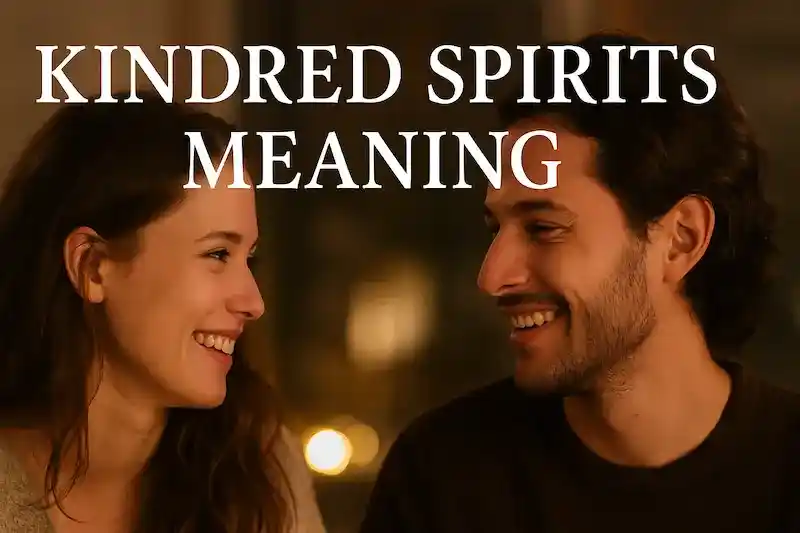
Table of Contents
Every so often, someone walks into your life and—without warning—feels strangely familiar. Maybe it happens in the middle of a crowded airport, during a late-night conversation at a friend’s dinner table, or while bonding over something as small as a sarcastic comment you both found hilarious. There’s no grand moment, no dramatic spark, just an unexpected sense of recognition, as if your inner worlds quietly nod to each other: Ah, there you are.
People use different words for this kind of connection—soul friend, twin flame, soulmate—but one phrase has a gentler, more grounded feel: kindred spirits.
There’s something comforting about it. It doesn’t demand romance, destiny, or lifelong permanence. It simply speaks to the truth that certain people resonate with us in a way that defies logic but feels deeply human. And in a world filled with noise, misunderstandings, and emotional distance, understanding the kindred spirits meaning can help us recognize the relationships that nourish us rather than drain us.
So what exactly makes two people feel so aligned, and why does this bond matter so much?
Let’s get into the heart of it—with warmth, honesty, and a little psychological insight.
What “Kindred Spirits” Really Means
At its core, kindred spirits are people who share a similar inner landscape—values, emotional rhythms, curiosities, and ways of moving through the world. You don’t need identical personalities or matching life stories. It’s more like an intuitive compatibility, a quiet feeling that your deeper layers speak the same language.
The phrase itself dates back centuries, and writers often used it to describe the comfort of finding someone who mirrors something essential about who you are. Not in a flattering or ego-driven way, but in the sense that the relationship makes you feel more yourself.
What distinguishes a kindred spirit from a close friend or supportive partner is the effortless part—the intuition, the “click,” the sense that you didn’t have to work your way into understanding each other. And that feeling alone can be transformative.
A Few Moments That Illustrate the Meaning
1. The coworker who becomes the one person you genuinely like talking to
Maybe you’ve both been quietly observing the office from the same cynical-but-playful angle. One day, you exchange a sentence—just a short comment about a spreadsheet or a client—and both of you burst into laughter that feels oddly overdue. Somehow this person gets your humor, your frustration, your rhythm. You didn’t choose them; the bond just formed.
2. The friend you don’t see for months, yet the conversation continues as if you never left
No awkward warm-ups. No need to perform. No explaining the backstory of who you are now. You pick up at the emotional frequency you left off. These friendships don’t age—they evolve.
3. The brief connection that feels strangely deep
It might be a seatmate on a long flight or someone you meet at a book event. The conversation moves from surface-level to meaningful territory without effort. The vulnerability feels natural rather than forced. Even if the relationship is temporary, the imprint stays.
These interactions resonate because they bypass the layers of polite social performance. Instead, there’s a direct line to something more essential.
Why Kindred Spirits Feel So Rare—and So Significant
Psychologists often talk about interpersonal resonance, a term describing how two people naturally align in emotional regulation, attention, and communication patterns. It’s not magic, but it feels close.
A few psychological factors help explain why kindred spirits meaning cuts deeper than ordinary connection:
1. Shared internal schemas
Cognitive psychology suggests we all carry mental frameworks—schemas—that shape how we understand the world. When you meet someone whose schemas resemble your own, conversations flow. You don’t have to justify your perspective. You don’t worry about being misinterpreted.
There’s a relief in that clarity.
2. Similar attachment rhythms
This is subtle but powerful. Securely attached people often sense each other. Anxious individuals can intuitively recognize others who lead with openness and emotional intensity. Avoidants gravitate toward those who respect space.
Kindred spirits don’t necessarily have identical attachment styles, but their emotional pacing meshes.
3. Vibe-based attunement
Daniel Siegel’s work on “interpersonal neurobiology” points to the way people sync up—breathing, tone, body language, even micro-expressions. Some individuals align almost instantly, the way dancers fall into step without planning.
We often describe this as chemistry or intuition, but it’s rooted in real psychological mechanisms.
4. The safety of being seen
A surprising number of people move through life feeling misunderstood. Not dramatically, just quietly unseen in the subtle ways that matter. A kindred spirit dismantles that loneliness. Suddenly, someone grasps your subtle jokes, your tiny anxieties, the intentions behind your words.
Feeling understood at that depth is rare enough that it stands out.
How Kindred Spirits Show Up in Different Relationships
The kindred spirits meaning shifts slightly depending on the type of relationship—but the essence stays the same: emotional alignment and mutual recognition.
Romantic partners
Here, the connection can feel electric but stable. You communicate easily. You both care about the same emotional truths. Conflicts feel solvable rather than existential. You don’t spend energy decoding each other.
The relationship feels like a place where both of you can breathe.
Friends
This is perhaps the most common kind of kindred spirit. These are the friends you can call after three years and still feel fully connected. They’re the ones who understand your humor without translation. You don’t need to explain why something hurts—you just talk, and they get it.
Family members
Sometimes a sibling or cousin shares your emotional blueprint more deeply than anyone else in your life. This kind of bond can feel grounding, even if the family around you is chaotic.
Passing connections
A kindred spirit doesn’t have to be lifelong. Some appear for a season or a moment. They still matter. The resonance teaches you something about yourself, even if the relationship is short-lived.
Why These Relationships Matter So Much
We are wired for connection, but not all connections are equal. Some energize us; others drain us. Kindred spirits fall into the first category. They strengthen mental health in ways that feel subtle but are backed by decades of research.
They reduce emotional labor
You don’t have to manage impressions or rewrite your sentences mid-conversation. The cognitive load is lighter.
They increase resilience
Psychology has long shown that people cope better when they have at least one emotionally attuned relationship.
They support identity development
When someone reflects your inner world back to you with clarity and acceptance, you understand yourself more deeply.
They foster emotional regulation
Attuned relationships help calm the nervous system. Your stress response literally eases when you’re with someone who resonates with you.
How to Recognize a Kindred Spirit (Without Forcing the Label)
It’s tempting to chase intense connections, but kindred spirits are rarely found through searching. They’re noticed through patterns:
- The conversation feels like returning to a familiar room.
- You don’t feel the need to perform or adjust yourself.
- Silence isn’t awkward; it’s comfortable.
- There’s a sense of emotional safety that arrives early.
- Shared values matter more than similar personalities.
What’s important is that the connection feels mutual, not idealized.
Practical Ways to Nurture These Connections
A kindred spirit relationship doesn’t maintain itself. Even the most natural bond benefits from care.
Stay honest—even when it’s uncomfortable
These relationships thrive on authenticity. Small truths protect the long-term connection.
Make room for differences
Kindred doesn’t mean identical. People grow, shift, and surprise each other. The relationship gets richer when you allow it space to evolve.
Show appreciation in small, human ways
A short voice note, a shared article, a “thinking of you” message—tiny gestures reinforce emotional alignment.
Protect the connection from over-intellectualizing
Not every deep bond needs a definition. The meaning exists in how it feels.
Don’t cling
The beauty of kindred spirits is that the connection doesn’t demand possession. Control kills what recognition grows.
Frequently Asked Questions (FAQ)
Are kindred spirits the same as soulmates?
Not exactly. Soulmate language often implies destiny or exclusivity. Kindred spirits are more grounded and can include friends, colleagues, or even brief encounters.
Do kindred spirits always stay in your life?
No. Some stay for years; some stay for moments. The impact matters more than the duration.
Can you have more than one kindred spirit?
Absolutely. These relationships aren’t limited. Different people can resonate with different parts of you.
Is a kindred spirit always romantic?
Not at all. Most are platonic. Romance is just one possible expression.
How do I know the difference between intensity and true resonance?
Intensity is fast, consuming, and emotion-driven. Kindred resonance is calm, steady, and recognizable, even without adrenaline.
Conclusion
If you’ve ever met someone and felt an immediate sense of familiarity, like your inner world finally had a witness, you’ve touched the essence of a kindred spirit. These relationships don’t rely on drama or intensity. They’re built on recognition—quiet, steady, and deeply human.
Understanding the kindred spirits meaning isn’t about chasing special relationships; it’s about learning to notice the people who make you feel more like yourself. The ones who help you breathe easier. The ones who reflect your truth back to you without distortion.
And if you’ve been lucky enough to have even one person like that, you already know—they feel like home.
Key Takeaways
Kindred spirits aren’t defined by intensity but by recognition.
They appear in many forms—friends, partners, even brief encounters.
These connections reduce emotional labor and enhance psychological well-being.
You can’t force them, but you can nurture them when they appear.
Above all, they remind us that we’re not moving through life alone.
References
- Daniel J. Siegel, The Developing Mind – concepts related to interpersonal attunement
- John Bowlby, Attachment Theory – understanding emotional pacing and resonance
- Aron et al. (1997), “The Experimental Generation of Interpersonal Closeness”
- Stern, Daniel – research on attunement and affective resonance
- Fredrickson, Barbara – “Positivity” and studies on emotional synchrony