Breaking Free as a People Pleaser: How to Reclaim Your Voice and Boundaries
I. The Quiet Exhaustion Behind Being a People Pleaser
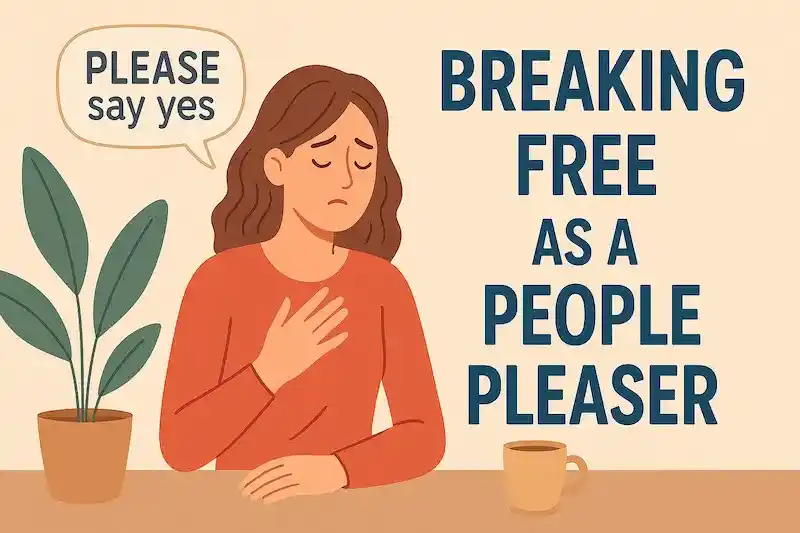
I used to think I was just being “easy to work with.” I smiled, nodded, and said yes to everything—from extra tasks at work to last-minute favors from friends—because I didn’t want to disappoint anyone. On the surface, it looked like I was simply warm and considerate. But deep down, there was a quiet exhaustion that never seemed to go away.
If you’ve ever found yourself agreeing to things you don’t really want to do, you probably know this feeling too. It’s not dramatic. It’s not loud. It’s that small sigh you release after you send a message saying, “Sure, no problem,” when you actually have no energy left.
Many people never realize that they’re a people pleaser. They just think they’re trying to keep the peace, maintain good relationships, or avoid unnecessary tension. And honestly, that’s what makes this habit so subtle—it hides behind kindness, patience, and the desire to make life smoother for everyone else.
But the truth is, constantly smoothing things over slowly wears you down. It chips away at the parts of you that should matter the most: your time, your needs, your voice.
II. What People Pleasing Really Feels Like From the Inside
Most explanations online talk about definitions and psychology, but people pleasing is much more personal than that. It’s not a “condition”—it’s an experience. And if you live with this pattern, you know exactly what it feels like.
It feels like walking into a room and instantly scanning everyone’s mood before you even settle into your seat.
It feels like your body agreeing to things faster than your mind has time to think.
It feels like you’re constantly adjusting yourself—your tone, your choices, your schedule—just to make sure no one gets upset.
A people pleaser isn’t trying to be perfect. They’re simply trying to avoid the discomfort that comes with disappointing others. They listen more than they speak, they apologize even when they’ve done nothing wrong, and they carry other people’s emotions like they’re somehow responsible for them.
There are usually three quiet thoughts running in the background of their minds:
- I don’t want to let anyone down.
- I hope they don’t get upset with me.
- I just want everything to stay peaceful.
And while these thoughts come from a good place, they often lead to self-sacrifice that no one else even notices.
III. Where This Habit Usually Begins
Becoming a people pleaser rarely happens overnight. It’s something that grows slowly, shaped by a thousand tiny moments that felt harmless at the time.
Maybe you were the “good kid” who rarely caused trouble because every adult praised you for being so understanding. Maybe you grew up in an environment where staying quiet kept things calm, where harmony mattered more than your personal preference. Or maybe you simply learned that being agreeable made relationships smoother and safer.
These aren’t dramatic backstories—they’re everyday stories. Moments where you learned that being flexible, kind, and accommodating earned approval faster than being honest about what you wanted.
Over time, saying “no” began to feel risky. Asking for something started to feel like an inconvenience. And before you knew it, being the dependable one became your identity.
None of this means something is wrong with you. It just means that somewhere along the way, putting others first felt easier than facing the discomfort that comes with being real.
IV. The Hidden Cost of Always Being “The Nice One”
On the outside, people pleasers seem like the perfect friend, coworker, or partner. They’re supportive, patient, cooperative, and always willing to help. But the part that others don’t see is the quiet cost that comes with always being “the nice one.”
You lose pieces of yourself without noticing.
You lose your boundaries because you’re too busy stretching yourself thin to keep everyone else comfortable.
You lose your time because you keep giving it away under the belief that disappointing someone is worse than feeling overwhelmed.
And you lose the chance to be understood because you rarely show others what you actually want.
One of the strangest things about being a people pleaser is how rejecting someone—even gently—feels ten times more intense in your mind than it does in reality. A simple sigh from someone else can echo in your head for hours, even if they’ve already forgotten about it.
But here’s the truth most people pleasers never hear:
Being agreeable doesn’t guarantee appreciation. In fact, it often leads others to assume you have unlimited emotional space to give.
V. The Subtle Signs You’re Becoming “Invisible” in Your Own Life
There’s a moment many people pleasers quietly experience: the moment they realize they’ve become invisible in their own story.
Not because others don’t care, but because you’ve spent so long adapting yourself to everyone else that you’ve forgotten what your own preferences even look like.
The signs show up in small, ordinary moments:
- When someone asks, “Where do you want to eat?” and your mind goes blank—not because you don’t care, but because you’re used to letting others decide.
- When you automatically soften your opinions so you don’t seem difficult.
- When you feel guilty for resting because someone else might need something from you.
- When you agree to plans but secretly hope they get canceled.
- When keeping the peace becomes more important than being honest.
These aren’t flaws. They’re the natural result of a habit you built years ago.
But the longer you silence your needs, the easier it becomes to disappear behind the expectations of others—until one day, you barely recognize the person whose life you’re living.
VI. The Turning Point: When Being a People Pleaser Starts to Feel Uncomfortable
Every people pleaser eventually experiences a moment that changes everything—a small, quiet flash of awareness that something has to give. For me, it wasn’t dramatic. It was a Tuesday afternoon when I realized that my friends and colleagues had grown accustomed to my constant availability. They assumed I would always say yes, that my time and energy were limitless.
I remember thinking, “Wait… did anyone ever ask if I was okay?” Suddenly, all those nights I stayed late at work, all those weekends I canceled plans for others, felt like invisible threads tugging me in directions I hadn’t chosen. It wasn’t that people were unkind—they simply weren’t noticing me because I had made myself invisible.
That moment isn’t a failure; it’s a wake-up call. It’s the instant you understand that always pleasing comes at the cost of being seen and heard. And for me, that realization became the first step toward reclaiming my voice.
VII. A Kinder Way to Rebuild Your Boundaries
After that turning point, I realized that changing didn’t mean becoming harsh or selfish. I learned that the goal isn’t to build walls—it’s to build honesty. Slowly, I began to experiment with small, gentle ways of honoring myself without hurting others.
Here’s what helped me:
- Respond a little slower.
Instead of saying yes immediately, I paused. A simple “Let me check my schedule and get back to you” gave me space to reflect on whether I truly wanted to commit. - Practice small “no’s.”
I started with tiny situations: declining a casual favor, turning down an extra task. Each “no” felt like a tiny muscle being exercised—it didn’t have to be perfect or dramatic. - Express feelings instead of explanations.
Rather than over-justifying, I began to say things like, “I don’t feel available today.” Honest, simple, and clear. - Shift attention back to my own rhythm.
I focused on what I genuinely needed, rather than constantly adjusting to everyone else’s expectations. It wasn’t easy, but it was freeing.
These changes didn’t happen overnight. Being a people pleaser is a deeply ingrained habit. But every small, honest choice gradually rewired the way I approached relationships.
VIII. What Real Connection Looks Like When You Stop Over-Pleasing
Something remarkable happens when you stop over-pleasing: people start seeing you. Not the agreeable mask you’ve worn for years, but the real, fully present person beneath it.
I noticed it first with friends. Suddenly, boundaries I had long avoided were respected. Invitations and favors became conversations rather than obligations. Relationships felt more balanced, and there was a genuine sense of mutual understanding.
The change extended beyond friendships:
- Friends began to respect my limits without resentment.
- Conversations became more authentic, free from the unspoken negotiation that used to dominate every interaction.
- I felt understood, not because I performed acts of kindness, but because I allowed myself to be truly visible.
Reducing people pleasing isn’t about being unkind or selfish. It’s about creating healthier, more authentic connections—ones where respect, understanding, and honesty thrive naturally.
IX. A Personal Reflection to Close the Loop
Looking back, I realize being a people pleaser wasn’t a flaw. It was a reflection of my desire to maintain peace and care for others. But wanting harmony doesn’t have to come at the expense of your own voice or well-being.
I’ve learned to honor both my needs and the needs of those around me. I’ve learned that saying “no” can coexist with love and kindness. And I’ve learned that real connection is built not on constant agreement, but on authenticity and mutual respect.
If you recognize yourself in these experiences, know this: being a people pleaser doesn’t make you wrong. It simply means you’ve cared deeply—sometimes too deeply. And the journey toward balance is not about changing who you are at your core, but about letting the world see the full, genuine version of you.